
Montgomery County Civil Docket Searches
Montgomery County publishes no free anonymous civil docket search. No sample civil docket appears on its official sources. For remote lookup of participating Circuit and Chancery cases, the state offers Public Access to MEC, or PAMEC. An account is required. Before anything else, pin down which court holds the case. Circuit Court keeps general civil matters not placed elsewhere. Chancery Court handles equity and family-side matters. Justice Court maintains its own limited civil files.
A summons, order, judgment, or other court paper may give you a case number. Use it. The public Montgomery sources publish no local civil case-number format. Field names behind the login are not publicly exposed. A party-name search may exist after authentication. The exact screens and filters cannot be described as confirmed Montgomery controls. Confirm the court first, then search with the most precise information you have.
- Identify whether the matter belongs in Circuit, Chancery, or Justice Court.
- For a remote Circuit or Chancery search, sign in to PAMEC or complete its registration process.
- Use the case number if known, or the narrowest available party information after sign-in.
- Confirm the court, case style, filing date, and latest entry before opening documents.
- Request the particular filing or certified judgment from the clerk that keeps the case.
Free electronic viewing of MEC civil and criminal documents is available in the clerk's office during regular business hours under the statewide policy. Restrictions and copy fees still apply.
Montgomery Civil Court Split
The Montgomery County Courts page lays out the county's civil docket channels. Circuit Court holds original civil jurisdiction over matters not vested exclusively in another court. Chancery Court is the specialty venue. It covers domestic relations, divorce, custody, alimony, adoption, estates, guardianship, land and equity disputes, and commitments. Justice Court sits apart as a limited-jurisdiction source.
| Court | Civil docket coverage | Holding clerk |
|---|---|---|
| Montgomery County Circuit Court | General civil matters not assigned exclusively elsewhere; the county says most cases are heard by juries. | Circuit Clerk Robert M. Perry, 614 Summit St., Winona; 662-283-4161. |
| Third Chancery District | Family, probate, guardianship, adoption, property and equity matters, commitments, and related cases. | Chancery Clerk Ryan Wood, 614 Summit St., Winona; 662-283-2333. |
| Justice Court | Civil actions not exceeding $3,500. | Justice Court, 706 Alberta Dr., Winona; 662-283-2290. |
Montgomery County's official Courts page lists no County Court. That omission matters. Don't rely on a statewide description of county courts to place a Montgomery civil case. When the amount or subject sits near a jurisdictional boundary, call the clerk.
Civil Dockets: What They Show
Think of a civil docket as the case's register of events. A typical path runs from complaint or petition, filing fee, and service. It moves through the answer, motions, notices of setting, orders, continuances or resets. Then come trial or another dispositive ruling, judgment, and post-judgment activity. Sequence is the whole point. A notice of hearing does not prove the hearing happened. A motion does not prove the court granted it.
No individual Montgomery civil docket is publicly viewable. PAMEC access is required. The public Fifth Circuit information covers system-level details and statewide flags only. What follows describes general docket concepts. It is not a promised field layout for every local civil case.
| Case number | The court-assigned identifier. No Montgomery civil-number pattern is published. |
|---|---|
| Case style | Can identify parties, such as plaintiff and defendant or petitioner and respondent, depending on the case. |
| Chronology | Records filings, service, answers, motions, notices, orders, resets, and appeals as they occur. |
| Setting | A notice or calendar event can identify a hearing; compare the newest entry with the newest notice. |
| Outcome | May include judgment, default judgment, nonsuit, dismissal, or another recorded disposition. |
Document images and docket entries are not the same thing. PAMEC may show a docket sheet or a document link, but an online image is never a certified copy. For a certified judgment or a specific filed document, ask the clerk who holds the file.
Montgomery Civil PAMEC Docket Access
PAMEC is the public, fee-supported access route for participating MEC courts. Its registration page lists a $10 annual fee for attorney and non-attorney accounts alike. Under the MEC terms, returned search pages cost $0.20 per page. This includes one page for a no-match search. Billing runs quarterly. Note that the charge attaches to pages returned, not just pages printed or downloaded.
The Mississippi Code access page is the official gateway. It leads to the state statutes governing records and clerk fees. It is a legal-source page. It is not a Montgomery civil docket database. Actual case access starts with PAMEC for remote electronic review. Or begin with the Circuit or Chancery Clerk for a records request or copy question.
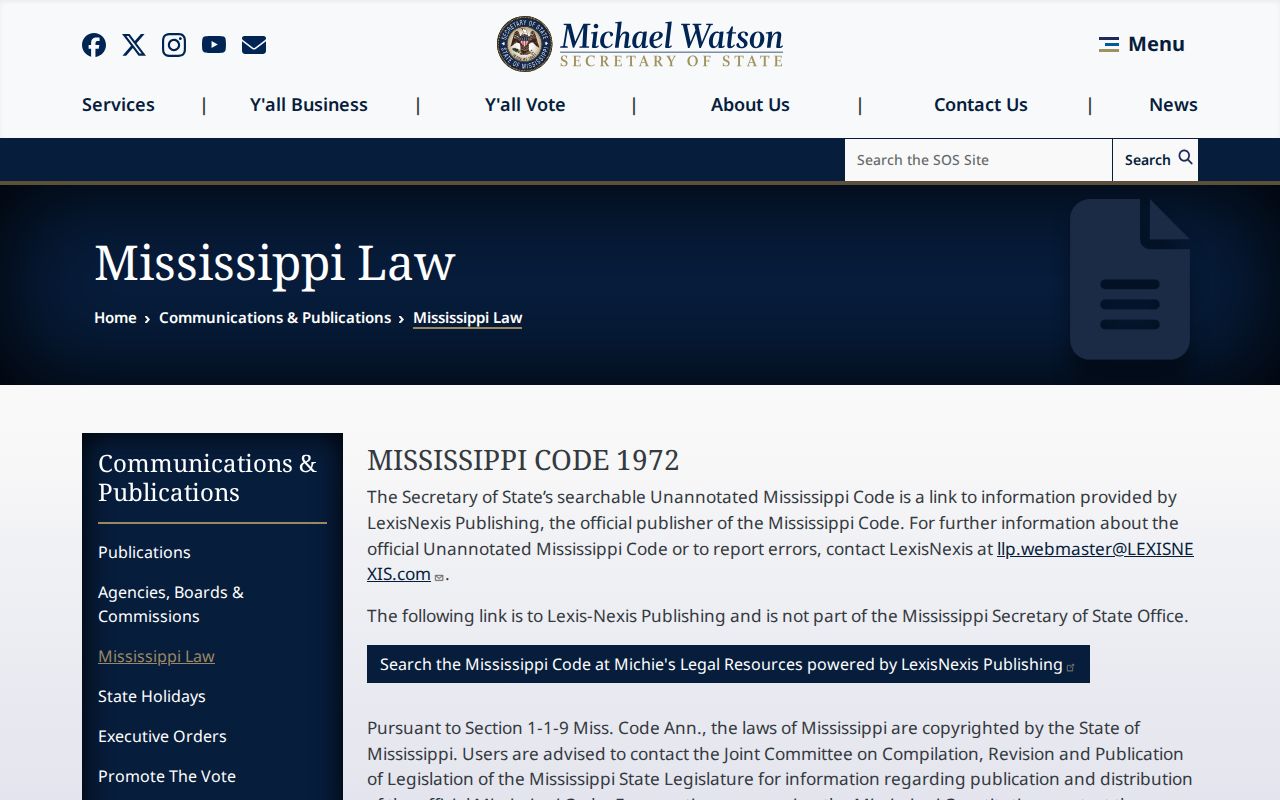
The statute gateway lets you check the governing law, while the clerk stays the local authority for a specific civil docket, image, or certification request.
Note: PAMEC's public login confirms account credentials but not the post-login Montgomery court selector, party field, or document button labels.
What Cases Fill the Civil Docket
Which court holds a case shapes what its civil docket will contain. Circuit Court takes general civil matters not assigned elsewhere. Chancery records look different in character. They include domestic, family, probate, guardianship, adoption, land, equity, and commitment matters. Justice Court keeps its limited civil actions separate. Learn those jurisdiction lines before worrying about a search method.
- General civil claims in Circuit Court that are not vested exclusively in another court.
- Divorce, custody, alimony, and related domestic-relations matters in Chancery Court.
- Estates, probate, guardianship, adoption, and commitments in Chancery Court.
- Land and equity disputes, including the county page’s note about property disputes over $50,000.
- Small civil actions within Justice Court’s $3,500 ceiling.
A lis pendens or land-record notice may sit in the Chancery Clerk's public recordings without being the whole court file. A family or probate caption can likewise rely on fiduciary roles rather than the plaintiff-and-defendant labels of ordinary civil litigation.
Montgomery Civil Justice Court Limit
Justice Court in Montgomery County takes civil actions capped at $3,500. Its files live apart from Circuit and Chancery records. All three courts serve the same county. A civil case may be missing from PAMEC or the Circuit Clerk counter. It may simply sit with Justice Court. That office sits at 706 Alberta Drive in Winona, reachable at 662-283-2290.
The county’s Chancery page lists property disputes above $50,000 among its matters. Treat these published markers as routing clues only, not a ruling on jurisdiction. A claim amount or remedy may sit near a line between courts. Call the clerk first. Confirm where the case belongs.
Hearings on the Civil Docket
A civil setting can show up in several costumes. You might see a notice of hearing, a calendar event, a scheduling entry, a motion hearing, a trial date, or a later reset. None of that proves a proceeding actually happened. Read the chronological register for the newest notice, order, continuance, or reset. Then confirm the live date with the clerk. A reset keeps the old setting in the history. It just pushes the next date forward.
Circuit Court settings belong to the Circuit Clerk at 662-283-4161. Chancery matters go to the Chancery Clerk at 662-283-2333. PAMEC helps once you have account access. But Montgomery publishes no daily public calendar or court-setting interface for civil dockets. The statewide Circuit term schedule covers terms, not case-by-case hearing notices.
After you spot a setting, pull the full case through Montgomery County Docket Search. Compare its newest dated entry against the notice you hold.
Montgomery Civil Docket Entries
Read civil docket entries in context rather than one at a time. A complaint or petition opens the case. Summons, citation, and return of service deal with giving the other side notice. An answer pushes back on the claim. A motion requests action from the court; an order is the court actually directing something. A notice of hearing announces a setting. Yet the entry that follows may show it continued, reset, or heard.
- Default judgment
- A judgment entered after a party fails to respond or appear as required.
- Nonsuit
- A civil plaintiff ends the claim without a final merits judgment, subject to the order’s terms.
- DWOP
- Commonly means dismissed for want of prosecution; the exact local entry should be confirmed.
- Abstract of judgment
- A condensed judgment record used for recording or post-judgment purposes.
- Garnishment or writ
- Post-judgment process that may appear after the main judgment entry.
Never stop at the current-status label. An agreed judgment, default judgment, nonsuit, and dismissal each do different work. Post-judgment activity can follow what looks like the end of the case.
Who Can See Civil Dockets
Mississippi separates remote viewing from in-person access. What you can see, copy, or obtain at the clerk’s office depends on where you ask. Under the Mississippi Judiciary public-records policy, remote access to civil and criminal MEC cases is limited to PAMEC subscribers. Anyone may view those same documents electronically at the clerk’s office. That access covers regular business hours. It remains subject to court orders and other restrictions.
Expect some material to stay hidden. Personal identifiers may be redacted or filed under seal. Youth Court records are confidential. Family, adoption, and protected matters may not display every filing or image. A sealed case may appear hidden, limited, or marked with a restricted status. Justice Court and municipal files never flow automatically into Circuit Clerk records.
Key Rules:
Mississippi Code §§25-61-2 and 25-61-5 provide the general state public-records framework, subject to exemptions and court rules.
Mississippi Code §25-7-13 concerns Circuit Clerk copy, certification, process, and final-record charges.
Mississippi Code §25-7-9 is reflected in the official statutory fee digest for Chancery Clerk charges.
Montgomery Civil Paper File Path
An electronic no-match does not mean the civil case never existed. The file could be older paper material. It might be an index-book entry, a Chancery or Justice Court case, a restricted matter, or an archive item. Ask whichever clerk holds the case. Find out whether it sits in MEC, paper storage, index books, or another archive. Give the court, the rough year, party names, a case number if known, and the exact document wanted.
The MDAH county-records microfilm catalog lists older county records that may exist on microfilm rolls. Titles vary by county. So the catalog points to possibilities rather than proving a specific Montgomery civil file is there. Start with the Circuit Clerk, Chancery Clerk, or Justice Court. Each can pin down which office holds the record.
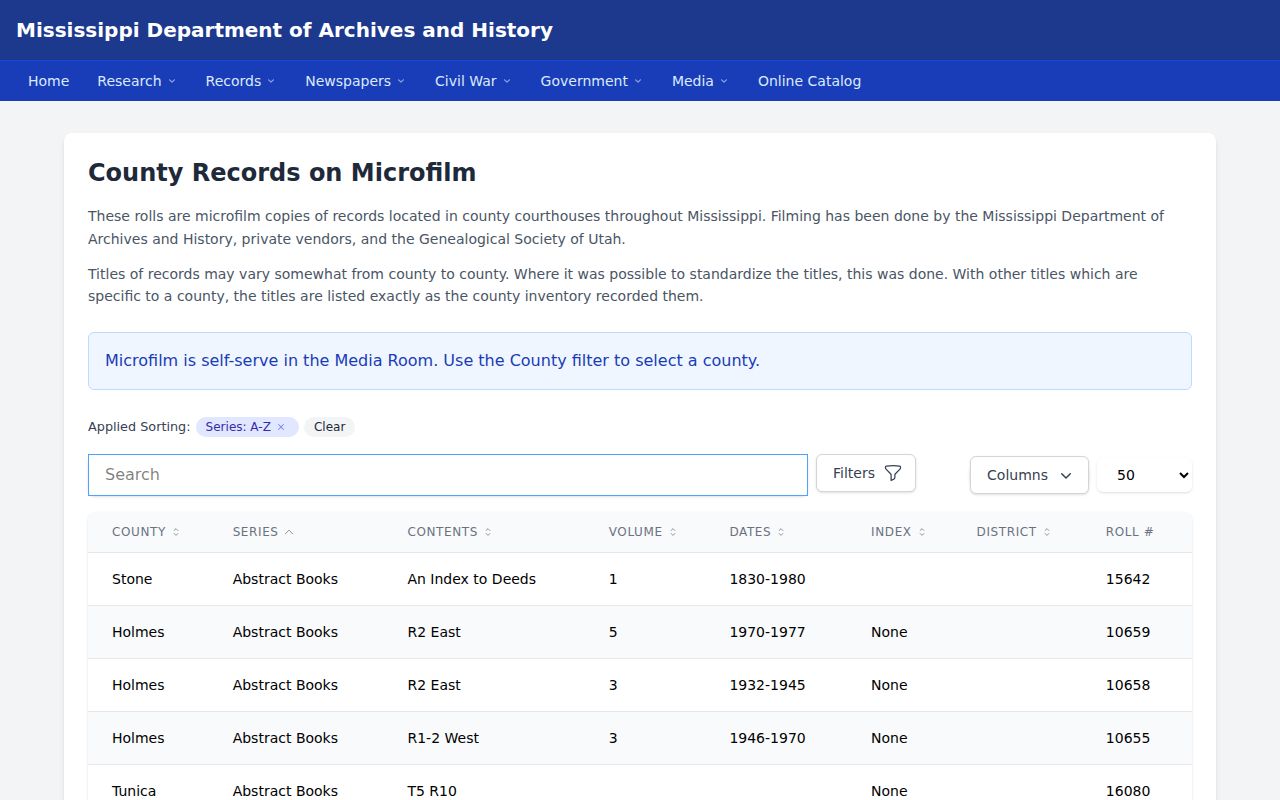
Historical catalog material helps once the holding clerk has named the right court and record series. That is when the microfilm listings earn their keep for older county records.