
How the Montgomery County Court Calendar Works
Court-date information in Montgomery County lives in several places at once. The case docket holds one piece. The term schedule and the notices add more. So do a phone call and a visit to the clerk's office. No single public source tells the whole story. A PAMEC docket sheet may show a calendar event once you have an account. A summons, ticket, or continuance notice often gives the most exact instructions for one case.
Montgomery County offers no free daily docket and no public court-setting search. The state judicial directory publishes term calendars rather than case lookups. For Circuit and Chancery matters, the clerk's office is the practical confirmation channel. Justice Court and the city municipal courts run their own schedules. Treat a court date as a case-specific fact. Never infer it from a general term.
Montgomery Court Calendar Terms
The Mississippi Judicial Directory and Court Calendar shows two Montgomery Circuit Court terms in 2026. One starts the first Monday of April. The other starts the first Monday of October. Each term runs three weeks and covers a block of Circuit Court business, including trials. The directory does not match cases to days. A term date alone never answers that question.
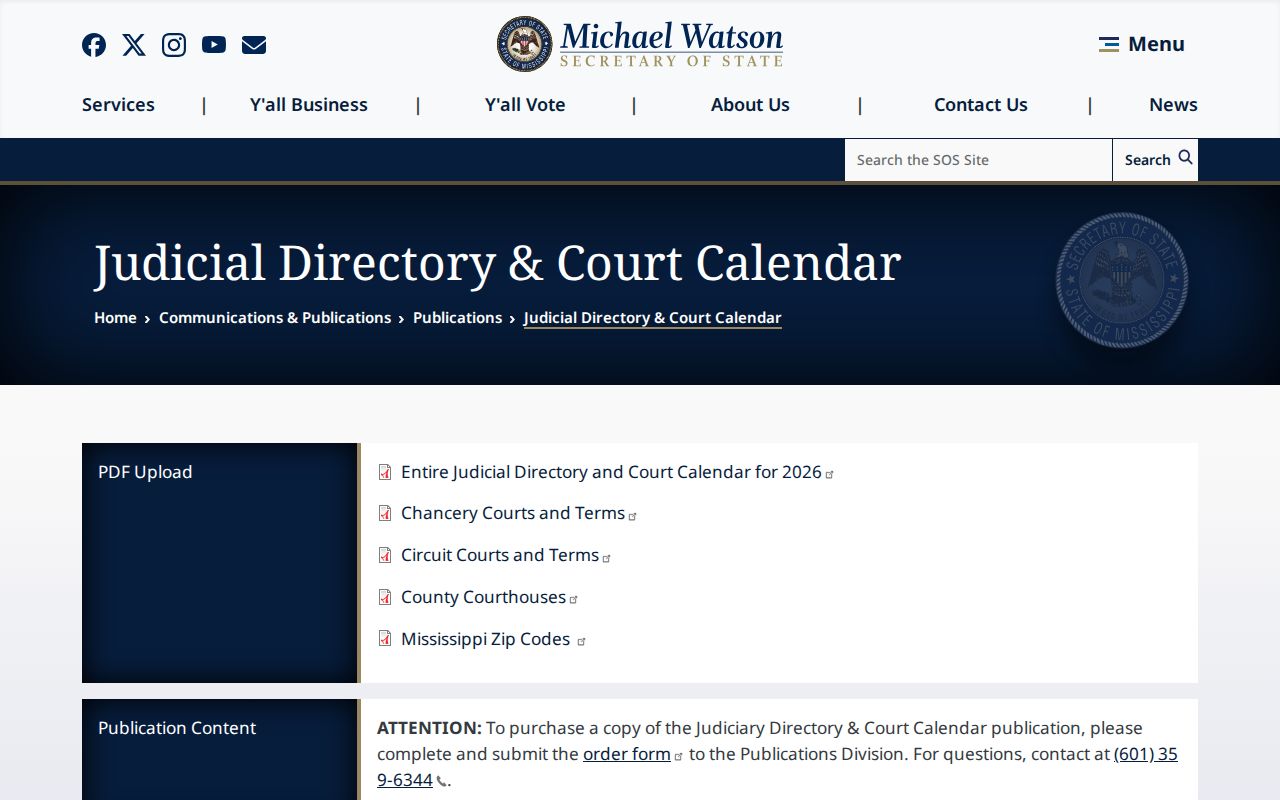
The directory supplies term context for a Montgomery County court schedule, but the docket, the notice, and the clerk supply what a specific setting requires.
Once you know a case belongs in a Circuit term, the questions change. Is the case on the current docket? Has it been passed or reset? Which court or courtroom is assigned? The Circuit Clerk answers those questions at 662-283-4161. A general term date should never stand in for that confirmation.
Montgomery County Court Date Lookups
Begin with the newest paper the court sent you. That could be a ticket, summons, notice of hearing, order, or continuance. Copy down the exact date, time, court, case number, and any courtroom listed on it. From there, use the route that fits your court. The account-gated MEC path can help with participating Circuit or Chancery matters. Still, the clerk and the notices remain essential. Montgomery County has no public setting-search interface.
- Read the newest notice and record the case number, court, date, time, and setting type exactly as printed.
- For a Circuit or Chancery case, review PAMEC after account access and compare the newest calendar event or docket entry with the newest notice.
- Call the holding clerk: Circuit Court at 662-283-4161, Chancery or Youth Court at 662-283-2333, or Justice Court at 662-283-2290.
- For a city matter, call the issuing municipal court. Winona lists 662-283-1140, while Duck Hill lists 662-565-7200. Kilmichael cases should start with Justice Court because the town no longer had a separate court in the cited audit.
- Ask whether the date is a trial term, motion setting, preliminary hearing, traffic docket, or reset, then bring the notice and case number on the appearance date.
Mississippi Judiciary policy allows free electronic viewing of MEC civil and criminal documents at the clerk's office during regular business hours, subject to restrictions and copy fees. Montgomery publishes no terminal location or terminal hours, so call the Circuit or Chancery Clerk first and ask whether a public MEC terminal exists before you make the trip.
Montgomery Court Calendar Access
PAMEC is the remote route into participating MEC courts. Its terms mention a calendar-events report. That report sits behind an account. The sign-in page requires a username and password. New users can complete MEC registration, choosing among Attorney, Non-Attorney, and Firm Administrator options.
The MEC payment-method page describes online debit or credit card and electronic check payment as the quickest route. A paper check must be mailed and processed first. Registration carries a $10 annual attorney/non-attorney fee. Returned search pages cost $0.20 each, even when a search returns no matches.
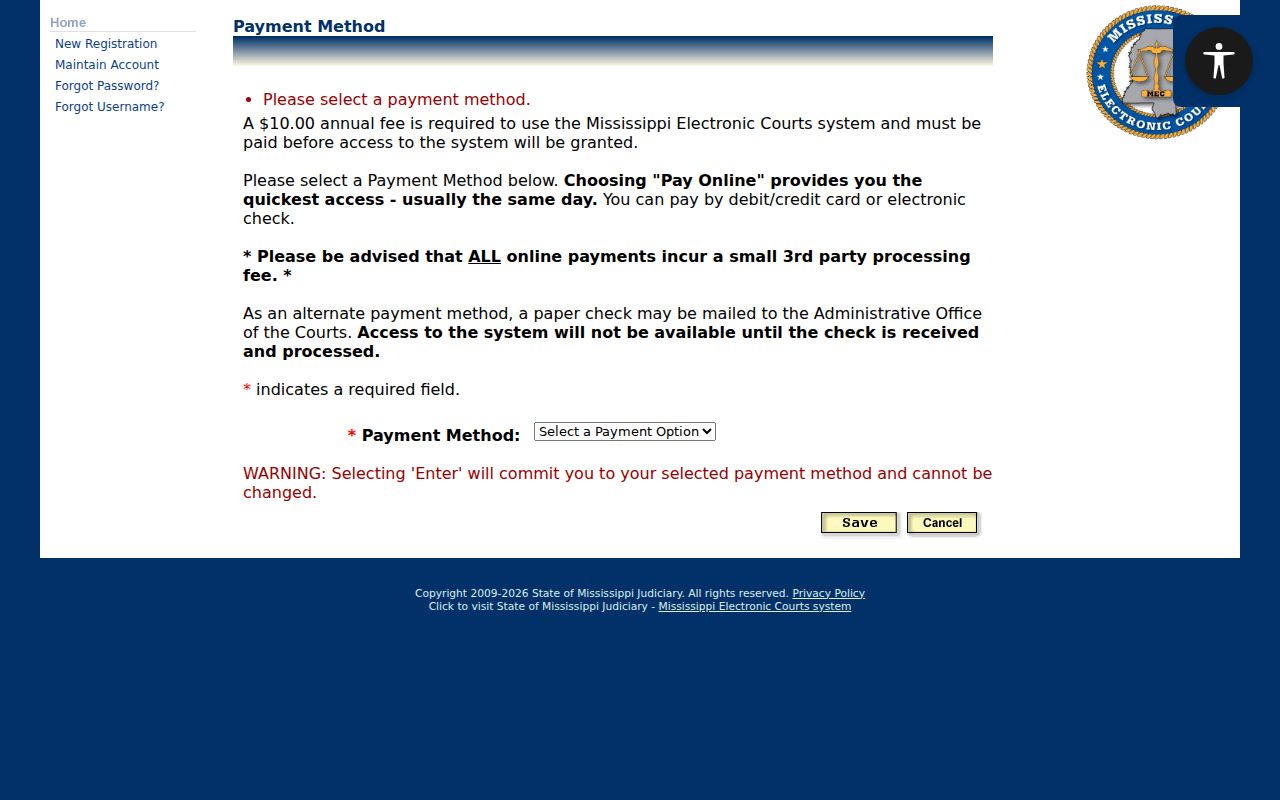
An account and a payment unlock remote access to the system. They do not turn the term calendar into a Montgomery County court-date search for an individual case.
Court Settings: What Each Field Means
Montgomery County publishes no field-by-field setting display. When a docket or calendar record lists details, these are the ones to copy from a notice or verify with the clerk. A setting might be a docket call, motion hearing, arraignment, preliminary hearing, trial, plea, sentencing, or status review. The court and the case decide the exact label.
| Date | The scheduled calendar date. Compare the newest date with any later reset or continuance notice. |
|---|---|
| Time | The listed time for the setting or docket call. Confirm whether it is an individual appearance time. |
| Court | The holding court, such as Circuit, Chancery, Justice, or the relevant municipal court. |
| Location | The court building or courtroom when stated. Do not infer a location from an office address. |
| Setting type | The purpose of the appearance, such as arraignment, motion hearing, preliminary hearing, trial, plea, or review. |
A docket call is a calendar session that flags cases needing action or a new setting. A continuance or reset simply moves the date. A trial term is the window in which cases may be scheduled. These working definitions help you read a notice. Still, the holding court always controls what its own labels mean.
Montgomery Court Schedule Sessions
Winona Municipal Court keeps a steadier rhythm than most Montgomery County calendars. Sessions run on the second and fourth Tuesdays at 1 p.m. They are held at the Montgomery County Justice Court Building on 706 Alberta Drive. That pattern covers Winona municipal matters only. County cases and traffic citations outside the city do not follow it.
One split trips people up. The municipal office sits at 116 Quitman Avenue. That address takes fine payments and clerk questions. The courtroom stays at 706 Alberta. Knowing which door you need can spare you a wasted trip across town. To confirm a session, a case date, or a last-minute change, call the Winona Municipal Court Clerk at 662-283-1140.
When a Court Date Moves
A reset moves the next court date, but it does not erase what came before. The docket history may still show the older date. A newer entry may read continued, reset, passed, or notice of reset. Read the newest dated entry first. That is your best clue to the current setting. Yet the clerk or court coordinator remains the authority on whether a party must appear. Their word settles it.
Montgomery County publishes no local reset form. Its public court pages post no notice period, remote-hearing policy, weather-closure procedure, or standing order. Winona offered one concrete example. A January 26, 2026 city notice canceled the municipal court set for the next day because of inclement weather and told readers to call the court clerk with questions. That episode is the lesson. A printed schedule should always lose to a later cancellation or a direct confirmation from the clerk. Note: Keep every notice until the setting is confirmed. The old date can linger in the docket history after the case moves.
Montgomery Court Reset Checks
Suspect a date has moved? Line up three things. Note the date on the newest notice, the last chronological docket entry, and whatever instructions the court gave you. Then call the clerk of the holding court. Ask whether the case was continued, reset, passed, canceled, or still on the docket. The Circuit Court number is 662-283-4161. Chancery Court answers at 662-283-2333, and Justice Court at 662-283-2290. In a represented case, the party's attorney can also confirm the current setting.
The MEC registration page lays out the account path for remote access to the system. It offers no public calendar search form, though. An account-based calendar event works as one confirmation point, never the only one. Pair it with a call to the clerk. Do that before you rely on it.
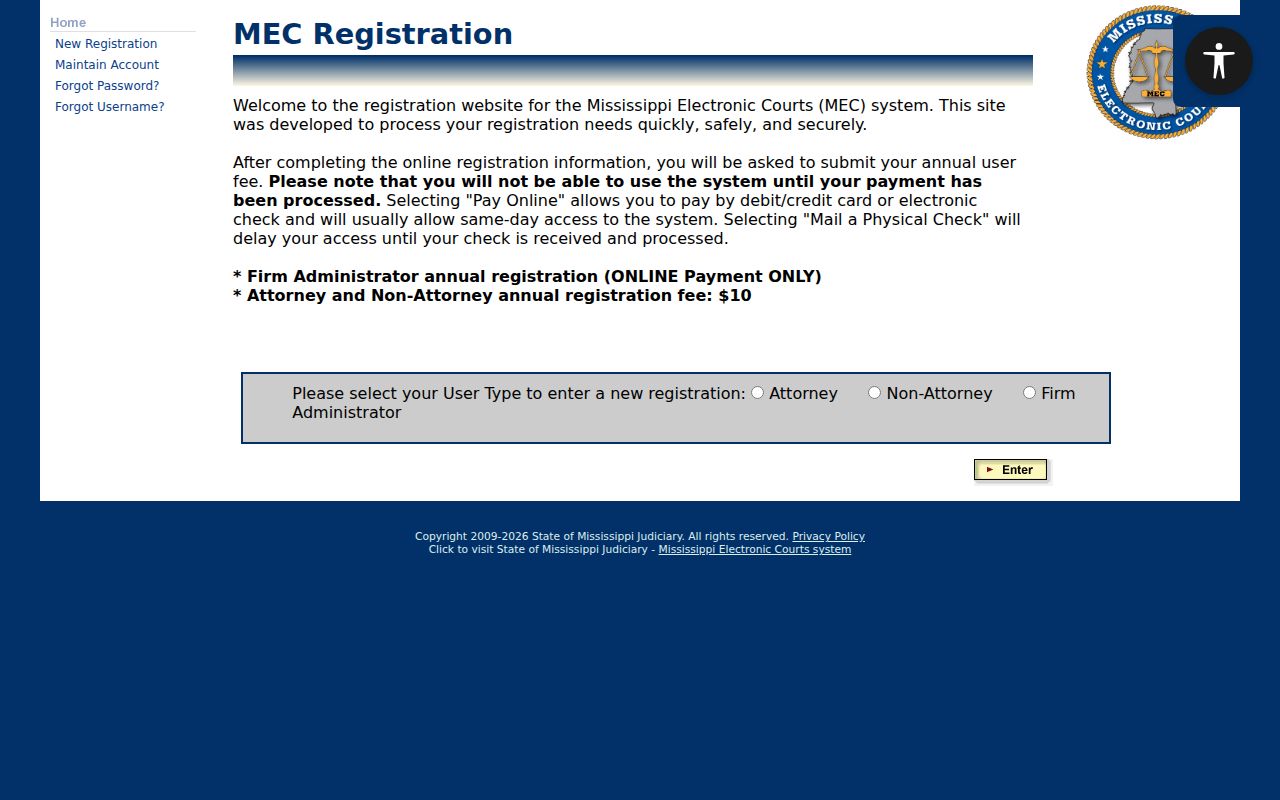
Registering an account may open the remote MEC channel, but a direct call to the clerk remains the surest way to verify a changed Montgomery County setting. Do both, and trust the clerk's answer.
Missed Settings and What Comes Next
Missed a setting? Call the holding court or clerk right away. Do what they tell you for that case. The next step depends on the case type and the court involved. In a criminal matter, failing to appear can carry serious consequences. A civil case can move forward. An order can also issue when a party does not respond or appear as required. The clerk can tell you the current docket status. A clerk cannot give legal advice.
Missed a setting? A missed criminal setting can lead to a failure-to-appear consequence, a warrant-related entry, or a bond issue; do not assume that an old calendar date has been excused.
Call the court that holds the case immediately, provide the case number and date missed, and ask whether a new setting, court appearance, or written request is required.
Consult a licensed attorney promptly about a missed Montgomery County setting and any order, warrant-related entry, default, or other consequence in the docket.
Bring whatever you have. A ticket, summons, notice, order, or the latest docket entry can help the clerk find the case fast. Keep the papers together, and ask for the exact next action rather than relying on a general term calendar.
Montgomery Court Calendar Limits
Montgomery County publishes no separate public web calendar or daily docket interface. The public Winona civic calendar offers month navigation and a board-meeting legend. It cannot search court settings. The county-linked traffic system is unavailable. Publicly visible MEC pages establish account access and system terms, not a free local calendar search.
Given that gap, the court-date chain matters most. Check the newest notice first and identify the correct court second. Use account-based MEC review when it fits. Then confirm with the clerk or city court. For a Circuit or Chancery case, the clerk office also provides in-person MEC viewing during regular business hours under the statewide policy. Before traveling, verify accessibility, interpreter, security, parking, or accommodation details with the holding clerk. The county court pages post no court-specific procedures.